Hantavirus Guide
Most hantavirus searches begin in an unpleasant little moment.
You move a box in the garage and see droppings along the wall. You open a cabin after winter and the air smells stale. You find a torn bag of bird seed in the shed. Maybe there is shredded paper under the workbench, or a dead mouse near the back door.
At first, it looks like a cleaning problem. Annoying, but ordinary.
Then you start thinking about the dust.
That is the part people often miss. Hantavirus risk is not usually about seeing one mouse run across the floor. It is more often about what rodents leave behind in quiet places: droppings, urine, saliva, nesting material, and dust. When that material dries and gets disturbed, it can become airborne.
So the broom is not always your friend here. Neither is the vacuum, at least not at the start.
Most people who find mouse droppings will not get hantavirus. That should be said clearly. But the cleanup still deserves care, especially in closed rooms, dusty sheds, cabins, barns, crawl spaces, and storage areas.
The useful approach is not fear. It is slower cleaning and better judgment.

The risk is usually in the mess, not the sight of a mouse
Hantavirus is a group of viruses linked to certain wild rodents. Some rodents can carry these viruses and leave them in droppings, urine, saliva, or nesting material.
You cannot tell by looking. A mouse does not look safe or unsafe. A dropping does not look infected or clean. That is why rodent waste should be handled carefully, even when the chance of infection is low.
The situation matters a lot. One dropping near a garage door is not the same as a closed shed with nests, dust, chewed bags, and a strong urine smell. A fresh sign in a clean room is not the same as a cabin that has been untouched for months.
What matters most is whether dry rodent material was disturbed. Sweeping, vacuuming, shaking blankets, dragging boxes, or moving old insulation can send dust into the air. That is why cleanup advice starts before the actual cleaning starts.
Here is a better way to judge what you found:
| What you found | How to read it | First move |
|---|---|---|
| A few droppings in one small area | Usually a small cleanup, but still handle carefully | Wet the area before wiping |
| Droppings in several spots | Rodents may have been moving through the room | Check nearby storage, food, and entry points |
| Nests, chewed bags, urine smell | More than a quick sweep job | Ventilate and clean slowly |
| Dead rodents or dirty insulation | Higher-contact cleanup | Consider help if the area is large or hard to ventilate |
| Dusty closed cabin, shed, or crawl space | Easy to stir up contaminated dust | Do not rush in with a broom |
That table is not a diagnosis. It is a way to avoid treating every situation the same.
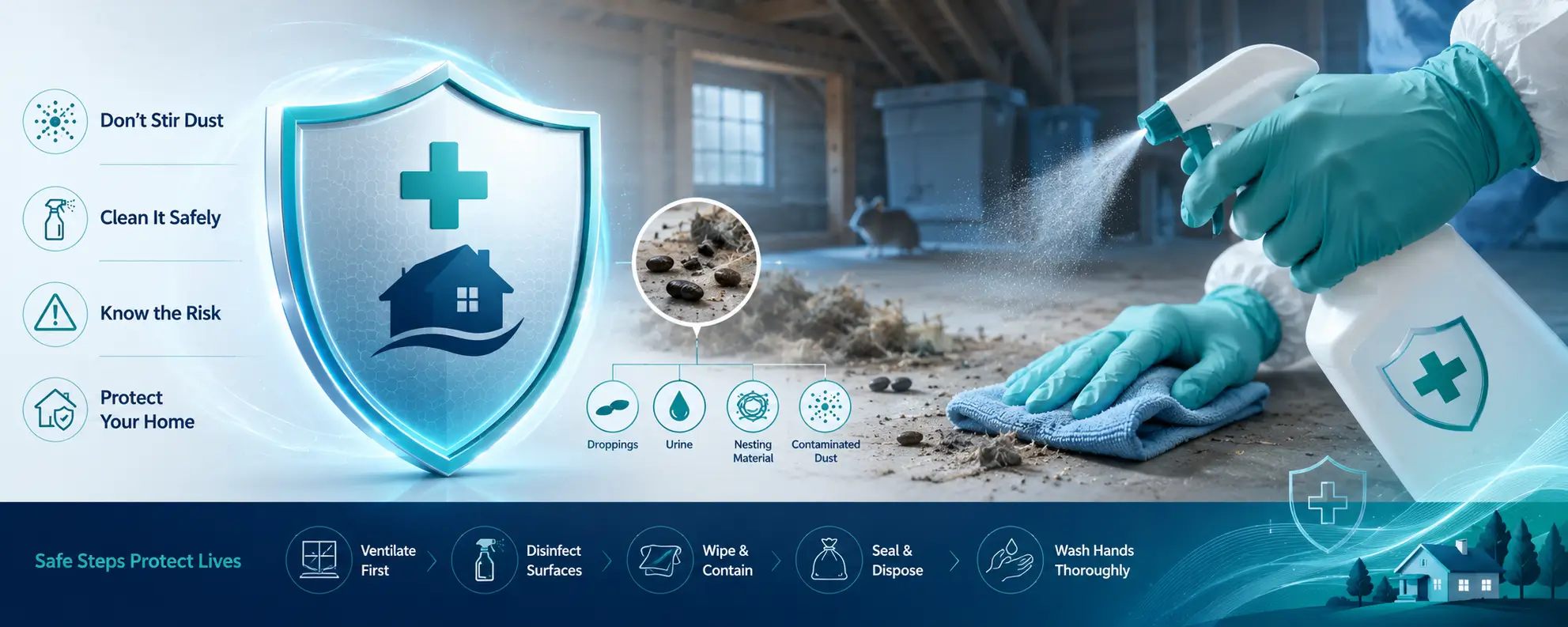
The ordinary chores that cause trouble
The usual exposure story is not dramatic. It is somebody doing a normal chore too quickly.
A garage gets swept. A shed gets vacuumed. A box is pulled down from a shelf. A cabin is opened before guests arrive. A blanket is shaken outside the door. A dead mouse is picked up with a thin paper towel because nobody wants to think about it for longer than necessary.
That is how people get careless.
Dry droppings can crumble. Nesting material can break apart. Urine can dry into dust around the area. Once that dust is floating, you cannot neatly put it back.
A rodent bite can also be a concern, but most household situations are not about bites. They are about dusty waste in places with poor airflow.
The safest first step is boring: stop, open the space if you can, and avoid dry sweeping.
Symptoms that should be connected to exposure
Early hantavirus symptoms can look like other illnesses. That is one reason people either worry too much or ignore the wrong signs.
A fever after cleaning a garage does not automatically mean hantavirus. A stomach ache after seeing a mouse does not mean disaster. But if you had a real exposure, that detail belongs in the conversation if you get sick.
| Symptom or situation | What to do with it |
|---|---|
| Fever, chills, heavy tiredness, muscle aches | Mention recent rodent exposure if you seek medical advice |
| Headache, dizziness, nausea, vomiting, diarrhea, stomach pain | Do not assume it is unrelated if it follows a dusty cleanup |
| Cough, chest tightness, shortness of breath | Get medical advice quickly after possible exposure |
| Trouble breathing or fast worsening weakness | Treat it as urgent |
| No symptoms after cleanup | Do not panic, but remember the exposure for the next few weeks |
The wording matters when you speak to a doctor or nurse. “I cleaned dry mouse droppings in a closed shed last week” is much clearer than “I was around mice.”
That does not mean you have hantavirus. It means the exposure is part of the story.
Cleaning mouse droppings without making dust
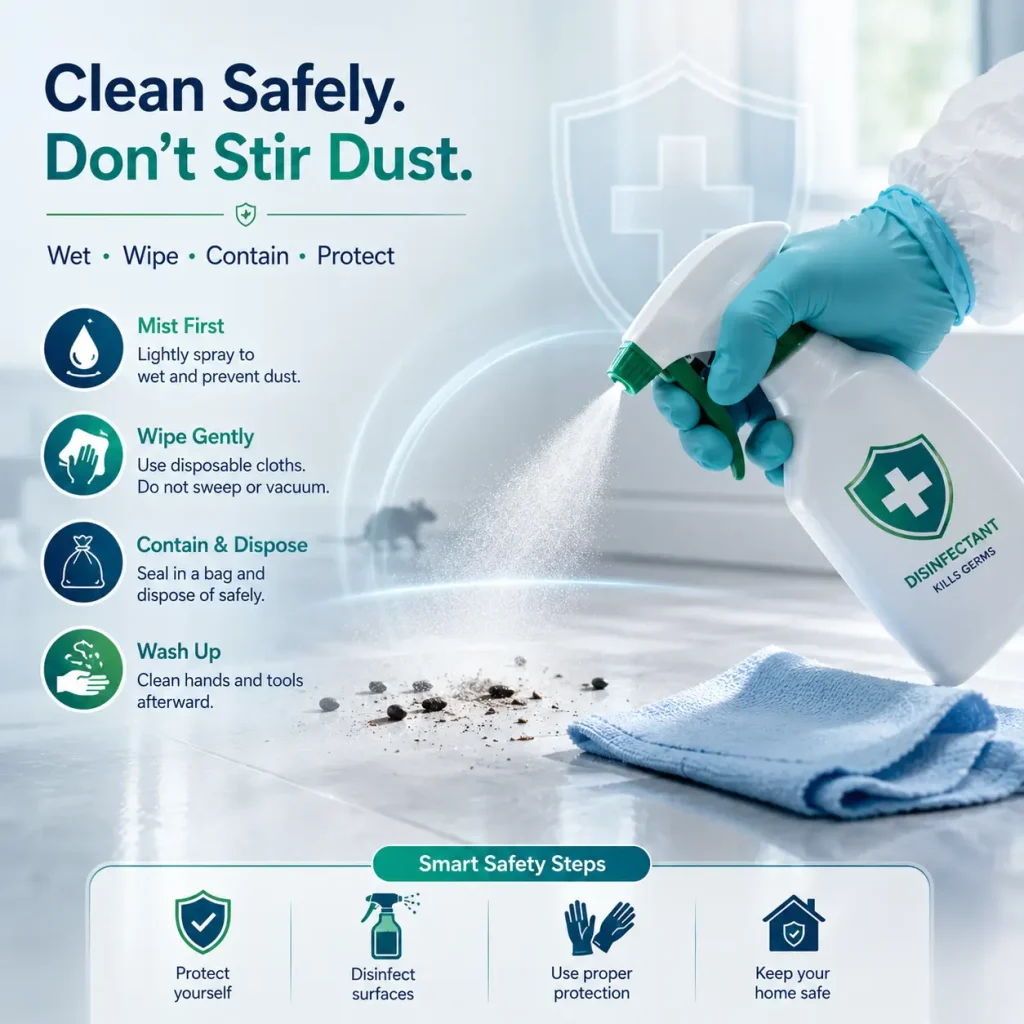
The goal is not to scrub harder. The goal is to keep dry material from getting into the air.
Before touching anything:
- Open doors or windows if possible, then leave the space for a while.
- Put on gloves before handling droppings, nests, or dead rodents.
- Spray the contaminated area with disinfectant until it is wet.
- Let it sit for several minutes.
- Wipe with paper towels or disposable cloths.
- Seal the waste in a bag.
- Clean the nearby surface, not only the visible pellets.
- Wash your hands after removing gloves.
Do not dry sweep first. Do not vacuum dry droppings. Do not shake dusty fabric indoors. If clothing or towels touched rodent waste, handle them gently and wash them if they are worth saving.
If you use bleach, do not mix it with other cleaning products. Never mix bleach with ammonia. That mistake creates a separate danger.
Once the visible mess is gone, look for the reason it happened. A gap under a door, torn vent screen, open pet food, bird seed, trash, or cluttered storage can bring the same problem back.
When the job is too big for casual cleanup
Some rodent messes are small. Some are not.
A few droppings under a sink are usually manageable. A shed with droppings across the floor, several nests, dead rodents, dirty insulation, and a strong smell is different.
Crawl spaces are awkward. Attics can be dusty. Barns and old cabins may have poor airflow. Storage rooms can hide more contamination behind every box. If a space has been closed for a long time, assume the first look does not tell the whole story.
This is where people overestimate themselves. They open the door, decide to “just get it done,” and by the time they realize the mess is larger than expected, they have already stirred up half the room.
If the contamination is heavy, spread out, old, or mixed into insulation, professional cleanup or pest control may be the better choice. That is especially true for anyone with asthma, breathing problems, immune issues, or another health condition that makes infections harder to handle.
Stopping is allowed. You do not have to finish a bad cleanup just because you started it.
If you already swept or vacuumed
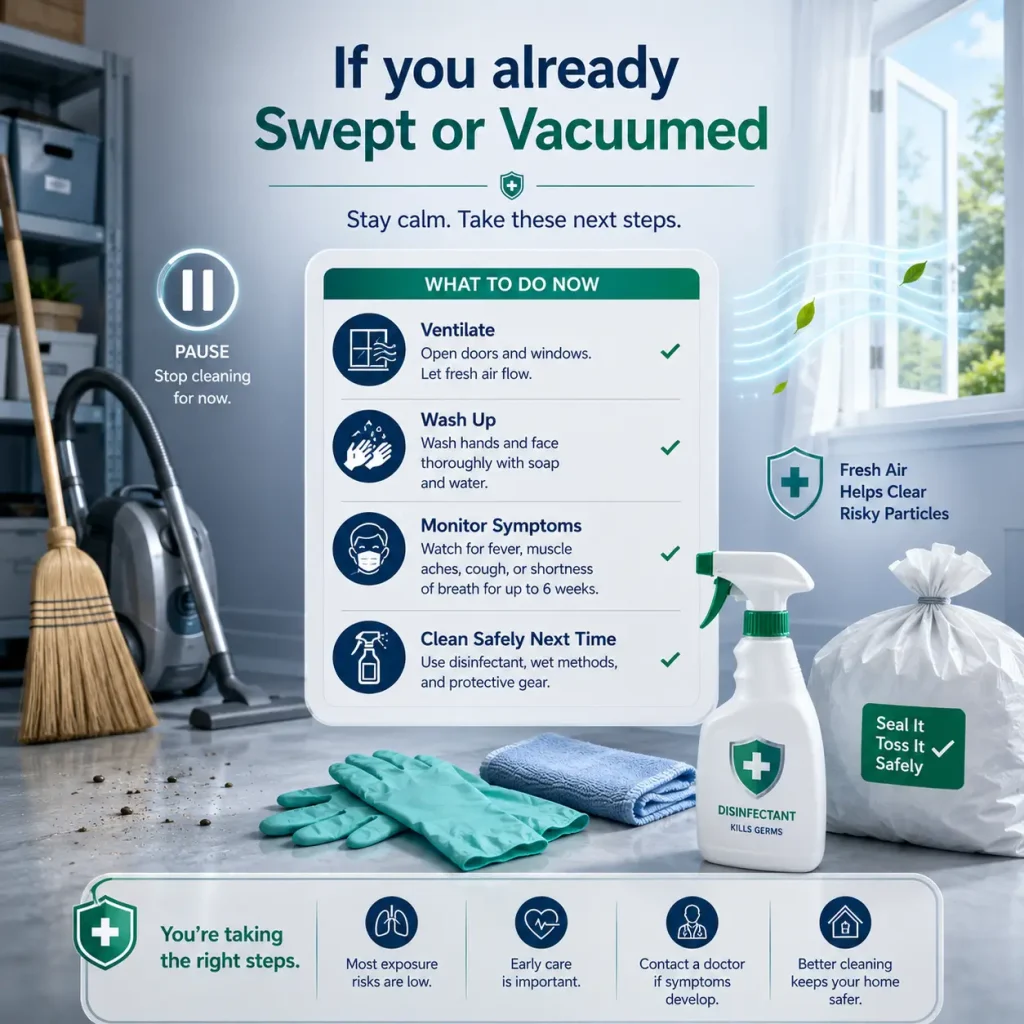
A lot of people only search for advice after the cleanup is done.
If that is you, do not spiral. Sweeping mouse droppings does not mean you will get sick. Vacuuming once does not mean infection is certain. Many people make that mistake and never develop illness.
Do the sensible things now:
- Leave the area if you are still there.
- Wash your hands and change dusty clothes.
- Clean shoes if they picked up debris.
- Write down where it happened and when.
- Note whether there were nests, dead rodents, heavy dust, or urine smell.
- Watch for fever, heavy tiredness, muscle aches, cough, chest tightness, or shortness of breath.
- Use wet cleanup if more work remains.
The note may feel unnecessary. Keep it anyway. If you feel sick later, memory gets fuzzy, and small details disappear.
Breathing symptoms are the line. If breathing becomes difficult after possible rodent exposure, get medical help.
Keeping rodents out
Prevention is not clever. It is maintenance.
Seal small openings around doors, pipes, vents, foundations, garage doors, basement windows, and utility lines. Store pet food, bird seed, pantry goods, animal feed, and trash in sealed containers. Move clutter off the floor where possible. Check quiet corners before rodents turn them into nesting spots.
Seasonal buildings need their own routine. Open a cabin, trailer, shed, or barn before using it. Let air move. Look for droppings, nests, chewed bags, and odor before people sleep, cook, or unpack inside.
If rodents keep coming back, something is still helping them: food, shelter, warmth, or an opening.
Find that first. Otherwise, cleaning becomes a loop.
Can hantavirus spread between people?
Most hantavirus risk comes from rodents and rodent waste, not casual contact with another person.
For a normal home, garage, cabin, or shed situation, the contaminated space is the issue. Talking to someone who cleaned mouse droppings is not the same as breathing dust from that room.
There is one exception often discussed: Andes virus. It has been linked to rare person-to-person spread in close-contact situations. For most household cleanup cases, though, the advice stays focused on rodents: avoid dry dust, clean carefully, keep rodents out, and take symptoms seriously after exposure.

Final note
The main rule is plain: do not turn rodent waste into dust.
Air the space. Wet the mess. Wait. Wipe. Seal the waste. Wash your hands. Then close the gaps and remove the food sources that brought rodents in.
That is not dramatic advice, but it is the part that matters.
FAQ
Can old mouse droppings still be risky?
Yes, if they are dry and disturbed. Wet them with disinfectant before cleanup and avoid sweeping or vacuuming them dry.
Do all mice carry hantavirus?
No. Many mice do not carry hantavirus. The problem is that you cannot tell which droppings are safe by looking at them.
Is one mouse dropping dangerous?
One dropping does not mean you will get sick. Clean it carefully and check nearby areas for more signs.
What are the first symptoms?
Early symptoms may include fever, tiredness, muscle aches, headache, chills, dizziness, nausea, vomiting, diarrhea, or stomach pain.
When should I get medical help?
Get medical advice if you feel sick after rodent exposure. Get urgent help for shortness of breath, chest tightness, worsening cough, or trouble breathing.
What should I tell a doctor?
Tell them when and where the exposure happened, what you cleaned, whether there were droppings, nests, dead rodents, and whether dust was stirred up.